
Closing the Human Error Gap
Human error is a factor in 75% of incidents at sea, but at HiLo, we are transforming how the industry manages this challenge. Our Human Reliability Model converts complex crew data into actionable insights, allowing us to help organizations identify potential risks before they escalate. By prioritizing data-driven decision-making, we empower shipping leaders to protect their personnel, improve operational efficiency, and establish a new standard for safety across the global industry.
Emily Dyson
9/18/20243 min read
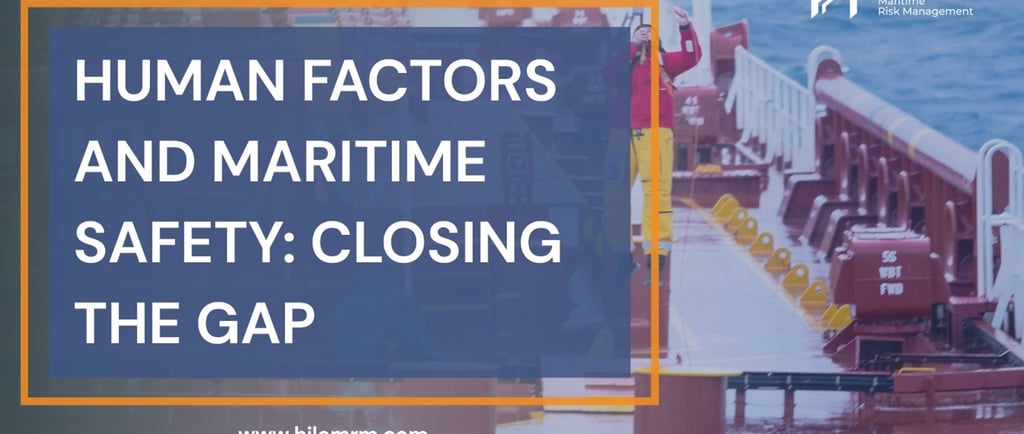
Human error is everywhere. That includes within the maritime industry.
HiLo’s CEO, Manit Chander has said, ‘Human error is the biggest driver of maritime incidents.’ 75% of accidents at sea can be attributed to maritime human error. Right now in the maritime industry there is no standardised system to address how maritime human reliability contributes towards maritime accidents.
So what can be done to ensure we can improve human reliability when it comes to protecting those at sea? How can we manage data better to help make this happen?
HiLo is here to help. We have made a huge breakthrough, establishing a Human Reliability Model that assesses the impact of human behaviour on maritime risk. HiLo’s digital model analyses thousands of data points, producing and providing you with the recommendations you need to improve safety aboard your vessels.
How it works
HiLo uses a predictive risk model to analyse data in a way that can help you prevent disaster in the future like never before.
Shipping companies will send different types of data to HiLo like how long crew members are working, work/rest numbers and training levels. HiLo then channels this data into its innovative mathematical and statistical model, creating invaluable risk reports.
The model output then provides analysis of the impact of human reliability on risk. This will show you where to prioritise actions and resources for each of your ships. You can then avoid disaster usually caused by human error.
Getting the right data
When you become a part of the HiLo community you will receive a custom analysis of your own human data. The analysis highlights any points of weakness within your organisation, creating the opportunity to make changes and improvements where they are needed.
You also gain access to HiLo’s community forum ‘CUPID’ where maritime experts can share their best practices with others in the industry. Knowing how to react to a risk is best learnt through engaging with others about their experiences.
HiLo is ISO27001 certified which means all data is anonymised when HiLo customers get access to it. This means you don’t need to worry about repercussions for past incidents. The aim of the Human Reliability Model is simply to improve the safety of crew members and to reduce the risk of incidents at sea.
Changing data analysis for the better
Anything that impacts the mental or physical capabilities of a crew member has the potential to lead to human error. Human error in the maritime industry can result in fatal consequences.
HiLo has spent years conducting in-depth research into the physical and emotional wellbeing of crew members and what factors can negatively impact them. Factors include going too long without visiting loved ones, long working hours, as well as worries around the current pandemic.
Environmental factors like poor lighting or inappropriate procedures can make even simple on-board tasks more challenging also.
HiLo strives to reduce these factors and use the Human Reliability Model to reduce the risks of mistakes being made at sea.
‘HiLo is revolutionising the way we approach human behaviour,’ Chander says, ‘Using psychological expertise and statistical analysis, we are predicting where humans are likely to impact safety. With that vital information, we can set seafarers up for success.’
When you lower the risk of incidents, you make the seas safer for everyone who works on them.
Collaborating for future success
HiLo’s Human Reliability Model is the first ever quantitative method used to measure the reliability of human behaviour within the maritime industry.
HiLo is happy to be collaborating with nine of the industry’s biggest names to test this unique pilot. Shell, Stolt, Gaslog and many more shipping companies are involved in this groundbreaking project. They have shared their people-related data with us to improve safety for their crew members.
Empowering you to make the best decisions
The maritime industry has seen at least 24,000 casualties at sea this past decade alone. HiLo is here to help you find long term, risk reduced solutions to potential human error at an organisational level.
Our client base gives you access to the deepest, real-time datasets in the maritime industry. This provides a foundation for the next generation analysis in human reliability, showing exactly how and where human error has been committed within the maritime industry. This can help many shipping companies avoid disaster in the future.
Together we can make the maritime industry safer through next generation data analysis.
Want to improve human reliability when it comes to crew safety? Explore our predictive risk model and book a free HiLo Demo today.
HiLo
The Power of Proactive Risk Management.
ADDRESS
enquiries@hilomrm.com
© 2025. All rights reserved.
CONTACT US
415C Margaret Powell House
Midsummer Boulevard
Central Milton Keynes
Milton Keynes
MK9 3BN
England